


A spell to win someone back is different from a general attraction spell. A candlelight heart spell uses symbolic focus, attraction work invites romantic interest, and an ex-reconnection ritual focuses on reopening communication. Consent matters throughout: love magic is not permission to override another person’s choices.
Wanting an ex back can bring urgency, hope, and confusion all at once. You deserve a clear view of what these rituals are intended to do, and where personal boundaries fit before you choose a path.
This guide explains how a candlelight heart spell differs from attraction spells and rituals focused on reconnecting with an ex. It also covers consent and the conversation that may accompany a reunion, helping you approach love magic with a clear purpose and respect for both people.
Key Takeaways
- Learn what a candlelight heart spell is meant to focus on and how its purpose differs from other love rituals.
- Keep consent and personal boundaries central when considering any form of love magic.
- Understand why reconnecting with an ex involves more than a ritual, including the role of honest communication.
- Choose an approach based on whether your aim is to invite attraction or reopen a connection from the past.
1. How a practitioner performs a candlelight heart spell
A candlelight heart spell gives a romantic intention a clear symbolic focus. A practitioner first clarifies whether the aim is to invite new attraction or reopen an existing connection. That distinction matters: a ritual for general romance differs from work centered on an ex. The practitioner then selects symbols that fit the intention, rather than treating every love spell as one fixed recipe. Candle color can carry meaning; the “30 Days To Pull Love” ritual, for example, calls for a pink candle.
Other named rituals use different objects and purposes. “Let Love Into the Picture” calls for two leaves, green thread, seven coins, and a needle. “Attract With A Rose” calls for two rose quartz crystals and rose water. These examples illustrate why a practitioner should explain a ritual’s focus and symbolism before performing it. They are distinct formats, not a checklist for every candlelight heart spell.
During a ritual, the practitioner keeps the intention specific and focuses on the kind of connection being sought. A candle provides a visual focal point, while spoken words or quiet reflection can frame the intention. The practitioner should explain what each symbol represents and how the ritual proceeds. Rose imagery, for example, may suit an attraction-focused intention, while leaves and coins belong to the separate “Let Love Into the Picture” format. Clear distinctions help keep the intention focused.
Alternatives to a spell to win an ex back include an honest, respectful conversation and giving the other person room to respond. If contact isn’t welcome, respect that boundary and focus on your own needs rather than trying to force a reunion. A ritual can focus on your hopes without claiming control over someone else. Its purpose is to express a desire for reconnection, not replace mutual choice.
2. Free will and consent in love magic
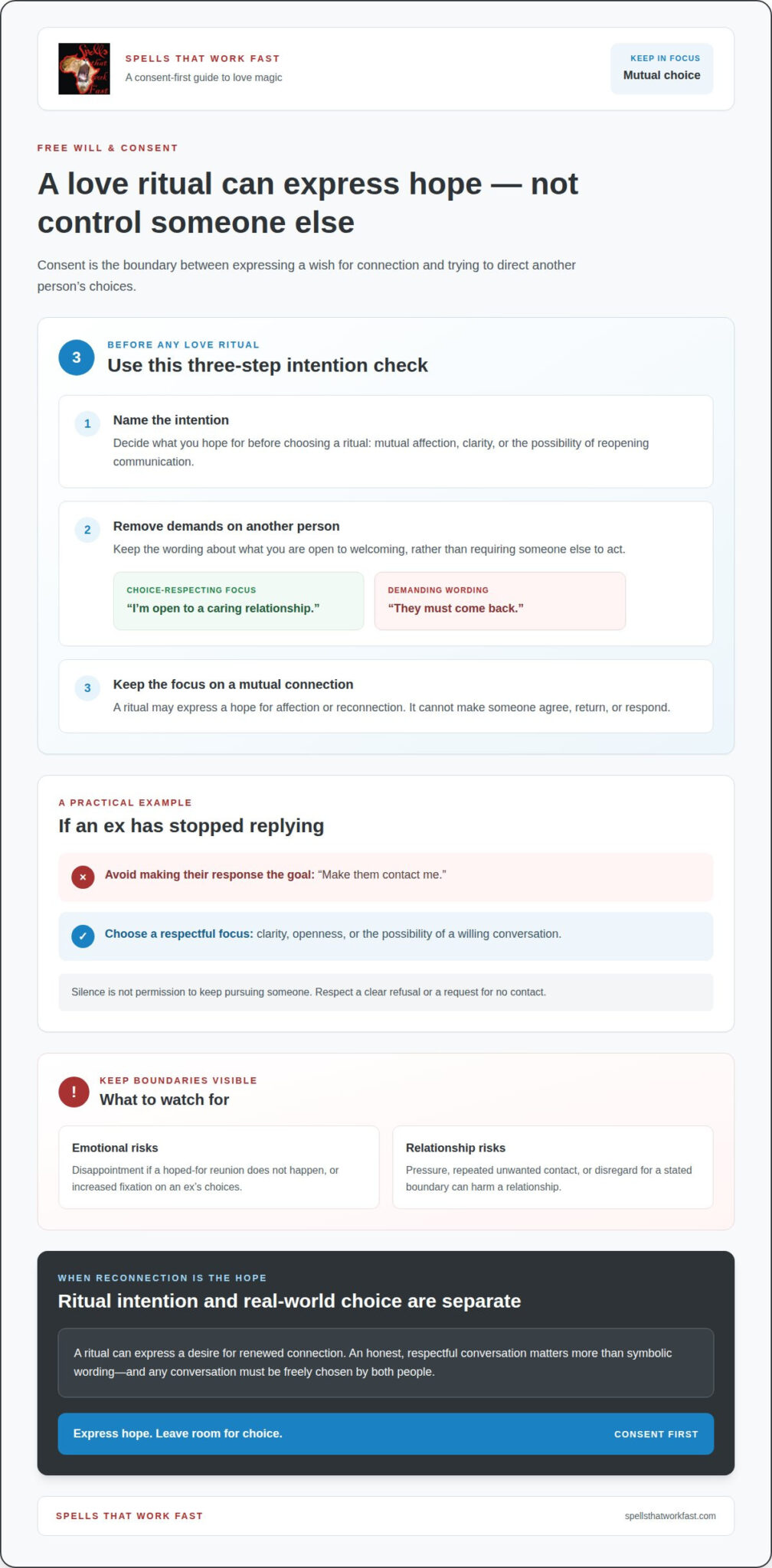
Consent is the boundary between expressing hope and trying to control someone. White magic cannot impose the practitioner’s desire on another person’s free will. A ritual may focus on inviting mutual affection, but it cannot make someone agree, return, or respond. A practitioner should explain this distinction beforehand and avoid promising control over a specific person.
Consider an ex who has stopped replying. An intention such as “make them contact me” treats their response as the goal. A more respectful focus might be clarity, openness, or the possibility of a willing conversation. The distinction is practical: one tries to direct another person, while the other names what the practitioner hopes to welcome. Consent also means accepting a clear refusal or request for no contact, rather than treating silence as permission to keep pursuing someone.
Are there risks or side effects of love spells? The clearest risks are emotional: disappointment if a hoped-for reunion doesn’t happen, or increased fixation on an ex’s choices. A ritual can also harm a relationship if it encourages pressure, repeated unwanted contact, or disregard for a stated boundary.
Before any love ritual, a practitioner can take three clear steps: identify the intention, remove wording that demands another person’s action, and keep the focus on a mutual connection. For example, “I’m open to a caring relationship” leaves room for choice; “they must come back” does not. If the aim is reconnection, a respectful conversation matters more than symbolic wording. Keep the ritual aligned with that principle. Explore consent-focused love magic as an approach centered on intention rather than control.
The “Love Sweet Like Candy” spell calls for two large egg whites, petals from two organic roses, and half a cup of sugar. It also calls for a whisk, a bowl, a pastry brush, and sugar.
These ingredients describe what the spell calls for, not a way to secure another person’s affection or consent. Any use of the ritual should remain focused on mutual connection and leave the other person free to choose whether to respond.

4. Spells intended to reconnect with an ex
A reconciliation ritual focuses on reopening a past connection, not attracting an unknown partner. The practitioner begins by clarifying the intention: renewed communication, a possible reunion, or emotional clarity. That choice guides the ritual’s symbolism and wording. The practitioner should distinguish hope for reconciliation from a demand that an ex return. This keeps the purpose clear before any symbolic work begins.
What rituals or steps might a practitioner use in a reconciliation spell? They can clarify the goal, choose a ritual that fits it, and explain how its symbols support the intention. One example is “A Stubborn Get Back Together Spell,” a named ritual built around red materials and other symbolic supplies. A spell may express a wish for renewed connection, but a real-world next step remains a willing conversation between both people.
What ingredients or supplies might a practitioner use in a get-your-ex-back spell? “A Stubborn Get Back Together Spell” calls for red felt, fresh ginger, a red candle, salt, scissors, a needle, thread, cotton balls, rosemary, a black permanent marker, red ribbon, and a lighter. These supplies belong to that specific ritual, not every reconciliation spell. The practitioner can explain the symbols used and how they relate to the stated intention.
To contact an ex respectfully, send one calm message asking whether they’re open to discussing the relationship. Keep it brief, acknowledge their choice, and accept a refusal or no response without sending repeated messages.
One person reported that an ex texted “I miss you” after five days, then visited the next day. This is one reported experience, not a reliable schedule or promised outcome. A practitioner should not present that timeline as something another person can expect. For a grounded attempt at reconciliation, keep the ritual’s intention separate from your ex’s decision, and make any conversation honest, direct, and freely chosen.
The account is one person’s experience: her ex texted that he missed her after 5 days, then came to her place the next day. The advice is to have an important conversation with the ex.
4. What does a spell to win someone back involve?
A practitioner begins by defining the ritual’s purpose: renewed communication, reconciliation, or clarity about the relationship. That choice shapes the symbols and wording. For example, “Level Up Love” uses two white candles and a red candle. The practitioner can explain how those elements relate to the intention before proceeding. This makes the work specific rather than treating every reconciliation spell as the same ceremony.
Another example is “30 Days To Pull Love,” which calls for a red paper heart, a sheet of paper, a pen, and an envelope. Its materials differ from “Level Up Love,” showing that rituals have distinct formats. A practitioner selects an approach based on the stated focus, then explains the role of its objects. These supplies are examples from named rituals, not a universal kit for every person seeking a reunion.
The practitioner should also clarify what the ritual can and cannot represent. A written intention may express hope for an honest conversation, while candle symbolism can mark a focus on warmth or renewed affection. Neither proves what an ex feels or decides. The practitioner should describe the process plainly, explain how the symbols connect to the request, and avoid presenting the ritual as control over another person.
Before beginning, the practitioner can confirm the intended outcome and keep the wording aligned with mutual choice. “I hope we can speak openly” names a possibility; “they must return” demands a specific response. That distinction helps prevent a hopeful ritual from becoming a promise of certainty and gives the client a clear understanding of its focus. A spell may express a desire for reconnection, but a real reunion still depends on both people choosing it freely.
Spells That Work Fast: Powerful Money Spell To Attract Wealth Instantly
Powerful Money Spell To Attract Wealth Instantly is for financial intentions, not relationship questions. If you’re focused on love or reconnecting with an ex, Spells That Work Fast offers Instant Love Spells That Work Fast. Choose the focus that matches what you want help with: attracting love, seeking renewed connection, or directing attention toward wealth.
Keep the distinction clear. A money-focused spell addresses a different intention from love magic, and neither guarantees an outcome. Spells That Work Fast also offers Spells For Business Growth Support and Success for business-related intentions. Choose the offering that matches your concern, while keeping your expectations grounded in the spell’s purpose.
Contact Spells That Work Fast to discuss your love-spell intention.
Choose a Next Step That Respects Both People
Before choosing a spell to win someone back, decide what you can control: your intention, your boundaries, and how you respond to the other person’s choice. A ritual may give your hope a symbolic focus, but it cannot make a relationship mutual. Let that distinction guide your next step, especially if communication has stopped or your ex has asked for space.
A spell cannot guarantee that someone will return. Keep your expectations grounded and don’t treat a ritual as a substitute for honest communication or acceptance. You can still act with purpose: be clear about what you want, leave room for the other person’s decision, and choose a path that supports your well-being whatever happens.
If you’re ready to discuss a love-spell intention, contact Spells That Work Fast. Take your next step with clarity and respect for both people.
Frequently Asked Questions
Are love spells to reunite with an ex considered ethical?
These rituals can be approached ethically when the intention leaves room for mutual choice rather than trying to control an ex. A ritual focused on preparing yourself for an honest conversation, for example, differs from one framed as forcing someone to return. Ethical practice also means explaining what the ritual represents and not treating symbolic work as proof that your ex wants reconciliation.
Do love spells actually work, according to evidence?
This article offers no reliable evidence that spells make an ex return. It describes one person’s experience, but that account is neither a reliable schedule nor a promised outcome. A reunion depends on both people choosing it freely.
How can you spot love spell scams and fake psychics?
Be wary of a practitioner who promises control over another person or guarantees that an ex will return. A practitioner should explain the ritual’s purpose and symbols, respect free will, and avoid claiming a spell can make someone agree or respond.