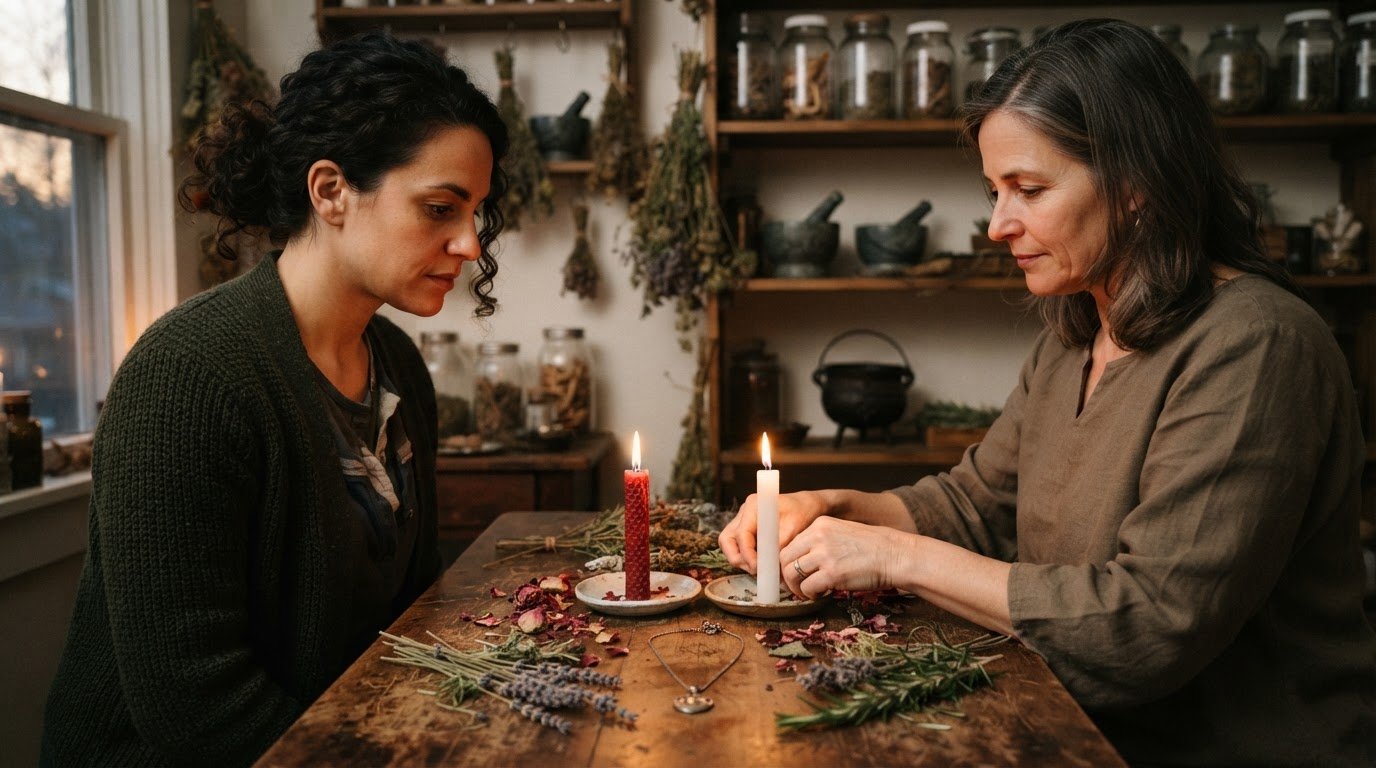

A spell for fear of losing someone may use a photograph or the person’s name written on paper as a personal focus. A meaningful object associated with them can also help shape a remembrance ritual.
It’s understandable to want something personal when you miss someone or fear losing your connection with them. A photo or name can give a ritual a clear focus, but it cannot guarantee that someone will appear or respond.
Here, you’ll learn what to provide, how those details may guide the preparation, and what to consider when seeking professional spellwork. You’ll also find out how remembrance practices can make room for your feelings without promising an outcome or asking you to perform a ritual yourself.
Key Takeaways
- Choose a clear personal focus and share the details that help a professional shape the work around your intention.
- Consider whether your request supports your own emotional needs or attempts to direct another person’s choices.
- Understand how a professional may use a candle ritual for reassurance, including the importance of careful candle handling.
- Match the service to your goal: a money-focused spell addresses a different need from love spellwork.
What to provide a professional using a photograph or written name
For a remembrance ritual, provide either a photograph or the loved one’s written name. The Lost Loved One Remembrance Spell uses one of these as a personal focus. This practice concerns someone who has died. If your loved one is living, explain your situation clearly so the professional understands your intention. A photograph isn’t required when you can provide their name. If you’re seeking a spell for fear of losing someone who is alive, say so directly. That distinction helps keep the ritual’s purpose clear.
Choose an image that clearly represents the person to you. It might show their face, or capture a moment you remember warmly. If you don’t have a suitable photograph, write their name on paper. Share the name they used in life, if that feels right. The professional can use your chosen focus to prepare remembrance work, or understand the relationship concern behind your request.
A personal detail can make the ritual feel more connected to your memories. You might describe an object, activity, or small pleasure associated with your loved one, such as a favorite book, gardening, or a song they enjoyed. A meaningful item can be placed beside their picture or written name, but you can describe it even if you don’t have it with you.
- Provide one focus: a photograph or written name.
- Share one personal detail: an interest, treasured object, or memory.
- Explain your intention: remembrance, comfort, or inviting a sense of presence.
Be clear about what you hope the ritual will express. In the described invocation, the deceased loved one is invited to come, if they choose. An invitation leaves the choice open; it does not demand their presence. A ritual can express longing, but it cannot establish that a spirit has appeared or guarantee a response.
The spell names purple as its color of the day, but remembrance rites can be practiced at any time of year. Those details help explain the tradition behind the work; they don’t replace the personal focus. Your photograph or written name, paired with a specific memory, gives the professional concrete information to shape the ritual around.
After the invocation, the practice suggests noticing any sense of presence and speaking to the person as you did when they were alive. Share whether that idea feels comforting or difficult. For someone seeking a spell for fear of losing someone, this distinction matters: remembrance focuses on someone who has died, while relationship concerns involve a living person’s independent choices. Clear details help define the ritual’s purpose from the start.
Are love and protection spells ethical if they affect another person’s choices?
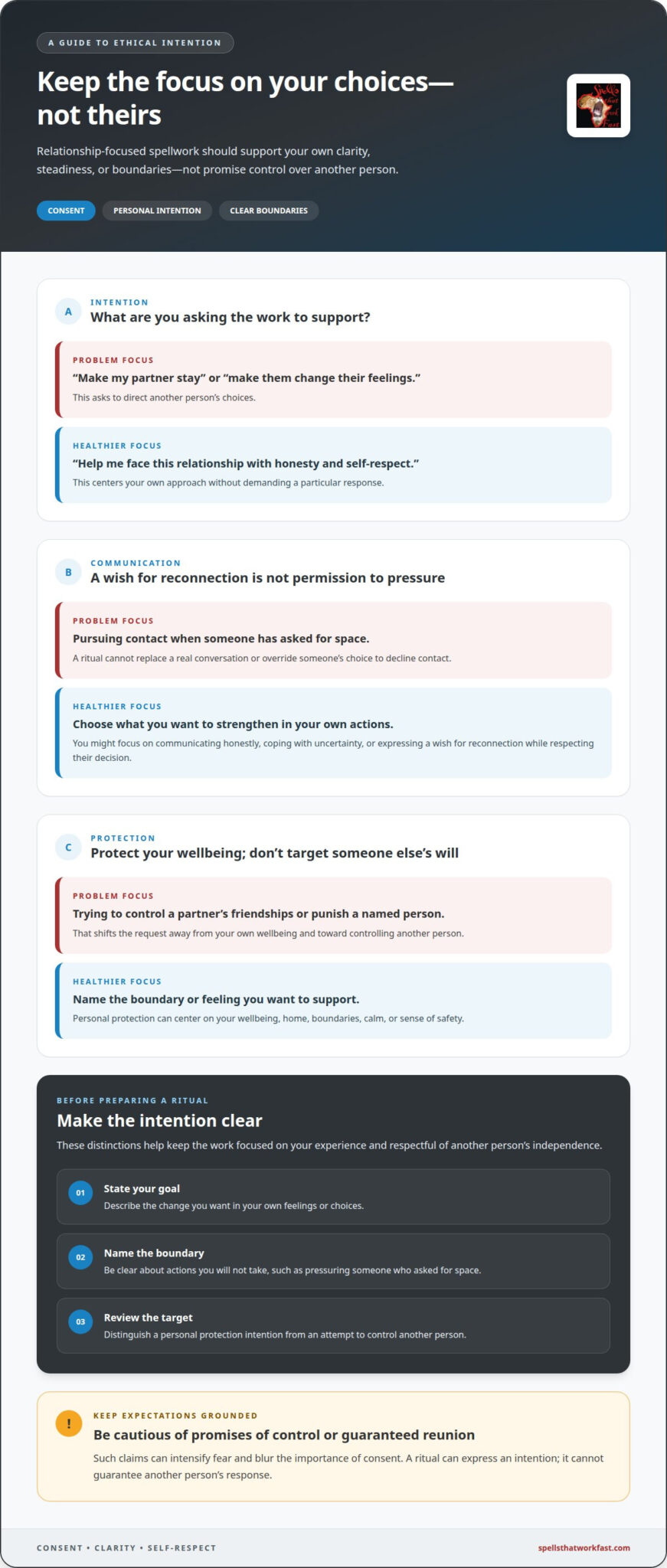
Consider the intention behind any relationship-focused request. Seeking confidence to speak honestly centers on your own actions; asking for a partner to stay tries to direct theirs. Spellwork should not be framed as a way to control another person. Be clear about that distinction when discussing a personal intention.
Consent matters in relationships. A person may choose distance, end a relationship, or decline contact, and a ritual cannot replace their choice with a real conversation. If your request depends on someone acting against their stated wishes, reconsider its purpose. You might instead focus on clarity, self-respect, or emotional steadiness.
Protection work is most clearly focused on your own wellbeing, home, or boundaries, rather than punishing a named person. If jealousy around a relationship unsettles you, an intention for personal calm and a sense of safety centers your needs. Trying to control another person’s friendships does not.
- State your goal: describe the change you want in your own feelings or choices.
- Name the boundary: identify actions you won’t take, such as pressuring someone who asked for space.
- Review the target: distinguish personal protection from controlling another person.
Before preparing a ritual, clarify your intention, including whether the person is living or deceased. If your concern involves a living partner, identify whether you want to express a wish for reconnection, communicate honestly, or cope with uncertainty. These are different aims. A clear intention keeps the focus on your experience, not on claiming authority over someone else’s decisions.
Treat promises of control, obedience, or guaranteed reunion with caution. Such claims can intensify fear and blur the importance of consent. A more grounded intention might be, “Help me face this relationship with honesty and self-respect.” It describes your own approach without demanding a particular response from your partner.
If your concern is safety, describe the actual issue rather than disguising it as romance. For instance, name the boundary you want to strengthen and the feeling you want to support. Protection-focused spellwork may fit a personal protection intention, while a request to override someone’s will calls for a different approach. Ethical spellwork should respect that difference.
What does a professional consider when preparing a simple candle spell for emotional reassurance?
First clarify what kind of reassurance you’re seeking. You may want calm during relationship uncertainty or comfort while grieving. Those needs call for different intentions and focus. A ritual can reflect your emotional needs, but it should not promise control over another person.
Candle color can match the aspect of peace you seek. Blue is associated with healing and peace. Pink represents love, friendship, and calm emotions. White covers each of those themes, including survival. A professional weighs your intention before selecting a color. If colored candles aren’t available, a white candle can represent several peace-focused intentions.
The wording of an intention also gives a ritual its focus. It might center on finding steadiness through a difficult period, rather than demanding that a partner return or change their feelings. Name what you hope to strengthen in yourself so the candle ritual has a clear emotional purpose.
Take care with candle safety. If a candle is lightly oiled, use only a small amount; excess oil and added ingredients can create a fire hazard. Consider whether extra materials are needed and avoid unnecessary additions. Some rituals use pantry ingredients, while spoken intentions can represent ingredients that aren’t present.
- Intention: identify the feeling or personal quality the ritual will focus on.
- Color: match the candle to the intended theme, such as blue for peace.
- Materials: keep additions limited and account for fire risk.
- Closing: decide how to end the candle and handle written intentions.
There’s no single required way to end a candle spell: the candle may be allowed to burn out or extinguished. Choose an approach that suits the setting and allows safe handling. If the ritual includes a written intention, dispose of the paper safely, whether by burning, burying, or another suitable method. Plan for its disposal as part of the preparation.
These choices keep a simple ritual connected to its purpose. A professional can shape the candle color, wording, and materials around emotional reassurance, while keeping safety in view. If you want this work prepared around your situation, request professional candle spell preparation.
Spells That Work Fast: Powerful Money Spell To Attract Wealth Instantly
If your main concern is financial, Spells That Work Fast offers the Powerful Money Spell To Attract Wealth Instantly. Its focus differs from remembrance or emotional reassurance: a wealth spell centers on intention and personal relevance, not a guaranteed financial outcome.
For a romantic intention, Spells That Work Fast offers Instant Love Spells That Work Fast. Be clear about the focus you want, while remembering that another person’s choices remain their own. A clear intention helps distinguish relationship concerns from financial aims.
Choose the offering that best matches your concern. To discuss your intention and the relevant spellwork, contact Spells That Work Fast.
Choose a Next Step That Fits Your Intention
If you’re considering a spell for fear of losing someone, begin by identifying what you want to focus on now. An intention grounded in your hopes, boundaries, and decisions gives a discussion about spellwork a clear starting point without treating another person’s choices as yours to control.
For romantic connection, Spells That Work Fast offers Instant Love Spells That Work Fast. For financial aims, it offers Powerful Money Spell To Attract Wealth Instantly. Business goals may align with Spells For Business Growth Support and Success. These offerings address distinct intentions, so choose the one that matches your concern rather than expecting one ritual to address every situation.
You can move forward without demanding certainty about another person’s choices. Explain what matters to you and the support you seek. Contact Spells That Work Fast to discuss your intention. Take your next step with care, keeping your own wellbeing at the center.
Frequently Asked Questions
What spells are traditionally used for fear of losing someone?
Remembrance rituals honor someone who has died; they are not a way to make a living person stay. An intentional candle lighting can mark a moment of mourning and remembrance. Its purpose is to express grief and remember the person, not to promise contact or a particular sign. Be clear whether you’re grieving or feeling anxious about a living relationship.
How can a professional prepare a non-coercive spell for easing fear of abandonment?
A personal intention can center on your own steadiness rather than another person’s behavior. For example, you might focus on meeting uncertainty with patience and self-respect. Share what brings on the fear, such as delayed replies or an upcoming separation. That context helps define a personal focus without framing the ritual as a way to compel contact.
Can spells guarantee that someone will stay in a relationship?
No. A spell cannot guarantee that someone will stay, commit, or return to a relationship. Each person makes their own decisions, and a ritual cannot ensure a specific response. Treat promises of reunion with caution. Instead, focus on choices within your control, such as expressing your needs clearly or deciding which boundaries matter to you.
What affirmations or rituals can a professional recommend to help with fear of losing a loved one?
An affirmation can focus on what you can control, such as, “I can face uncertainty with care and honesty.” For grief, lighting a candle intentionally can mark a moment of remembrance. Keep the words personal and specific, perhaps naming a quality your loved one taught you. Use the practice to acknowledge your feelings, not to demand an outcome.