


You can’t control another person’s jealousy, but you can decide how much access they have to your plans, progress, and peace. Protection from jealousy and envy starts with clear emotional boundaries: share achievements selectively, avoid getting pulled into needless arguments, and keep your attention on the goals that matter to you.
It makes sense to feel exposed when someone responds to your good news with criticism, gossip, or distance. You don’t have to explain every choice or prove your success is deserved. This article explains how to recognize the difference between envy and jealousy, decide what to share, and respond to tension without letting it take over your day. You’ll also learn when spiritual support may be a meaningful next step.
Key Takeaways
- A professional can help you clarify what to share, how to respond to criticism, and where to set firm emotional limits.
- Spiritual or religious practices may offer personal meaning and comfort, but their role depends on your beliefs and needs.
- Protective charms and evil-eye symbols can hold cultural or spiritual significance; distinguish that meaning from evidence of protection.
- Repeated monitoring, isolation, threats, or control are serious warning signs. Prioritize your safety and seek trusted support.
How a professional can support setting emotional boundaries
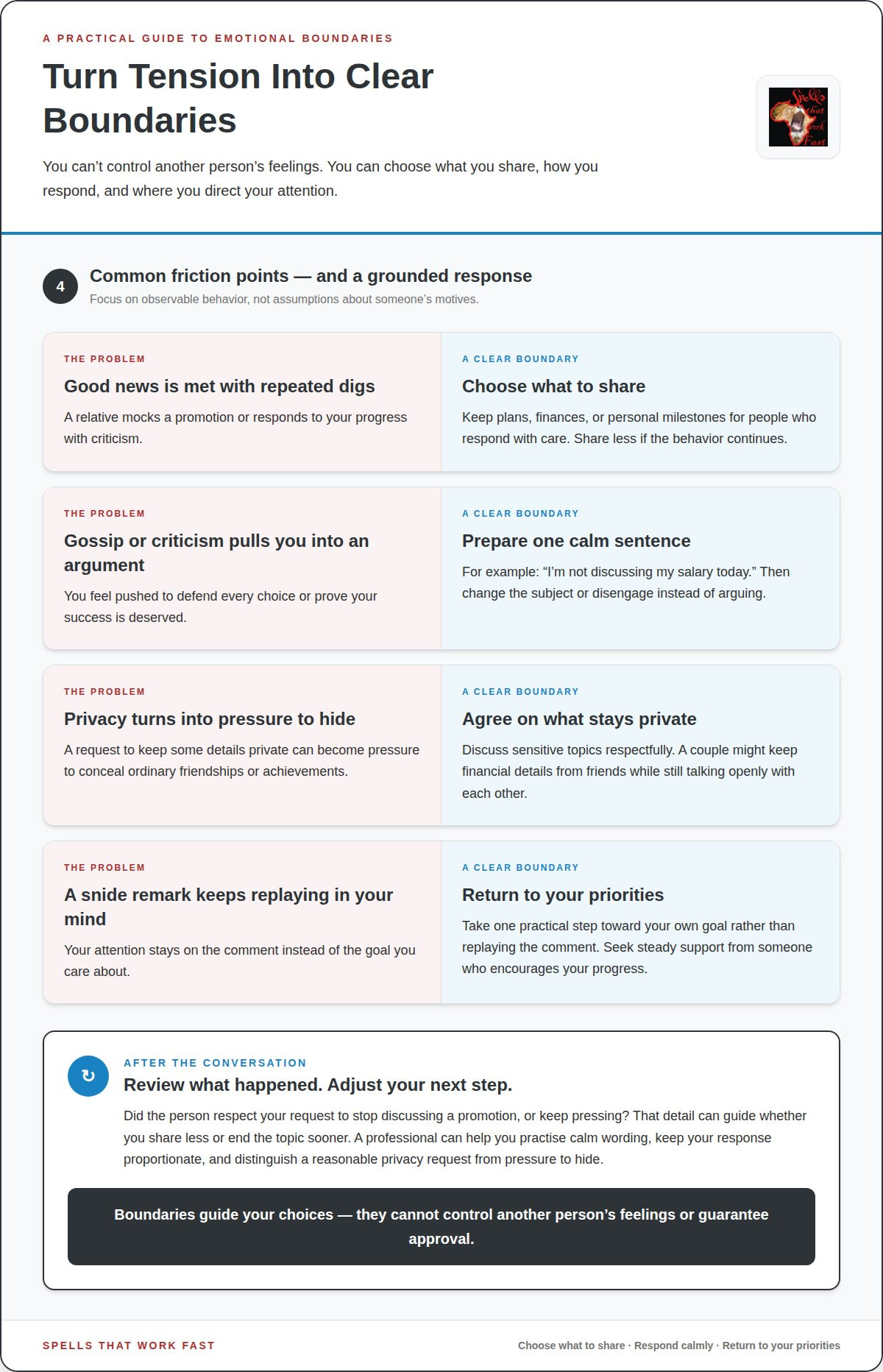
A professional can help turn vague discomfort into clear boundaries. Start by naming the behavior that unsettles you, such as repeated digs after you share good news. Then identify what you want to change. For example, you might share fewer career details with a relative who mocks each promotion. This keeps the focus on specific actions, not assumptions about someone’s motives.
Prepare a short response before your next tense conversation. For example, say, “I’m not discussing my salary today,” then change the subject. A professional can help you practise calm wording and decide when to end the conversation. You don’t need to defend every choice or prove your success is deserved.
To protect a relationship from jealousy, agree on which topics are private and how to discuss concerns respectfully. A couple might choose not to share sensitive financial details with friends while still talking openly with each other. A professional can help distinguish a reasonable request for privacy from pressure to hide ordinary friendships or achievements.
- Choose what to share: Keep plans, finances, or personal milestones for people who respond with care.
- Set a response: Use one calm sentence for gossip or criticism, then disengage instead of arguing.
- Find steady support: Talk with someone who encourages your goals without treating your progress as competition.
- Return to your priorities: After a snide remark, take one practical step toward your own goal rather than replaying the comment.
Review the boundary after real conversations. Did the person respect your request to stop discussing a promotion, or keep pressing? That detail can guide your next step, such as sharing less or ending the topic sooner. A professional can help you keep your response proportionate and consistent. Boundaries guide your choices; they cannot control another person’s feelings or guarantee approval.
4. What spiritual or religious practices are used for protection from jealousy and envy?
People draw on spiritual practices that reflect their faith and tradition. A Christian might seek comfort through prayer or a blessing from a pastor. A Muslim might make du’a, a personal supplication. Jewish practice can include prayer or reading Psalms. These are examples of personal practices, not universal rules. Their meaning depends on the person and their beliefs.
A spiritual adviser or religious leader can help you choose a practice that feels appropriate. They might ask what protection means to you, which traditions you follow, and whether you want prayer, reflection, or a ritual. For example, someone uneasy about workplace envy might request a private blessing before an important presentation. The conversation should respect your beliefs and avoid treating another person’s feelings as proof of spiritual harm.
Some people combine meditation or gratitude practices with prayer. A Buddhist-inspired loving-kindness meditation, for instance, directs attention toward goodwill rather than retaliation. A faith leader might also encourage reflection on humility, compassion, and constructive ways to respond to conflict. These practices can shape personal intention, but they do not replace practical boundaries, honest conversations, or safety measures when someone behaves harmfully.
Ask what a proposed practice involves before agreeing. Clarify whether it is prayer, a symbolic ritual, or guidance rooted in a specific tradition. A trustworthy spiritual adviser explains the purpose plainly and respects your right to decline. Be cautious of anyone who uses fear, demands secrecy, or promises control over another person. Spiritual support should align with your values, not pressure you into choices. For a spiritually focused approach, explore personal protection guidance that fits your concern.
Awareness of envy can help you understand what you want and pursue it without damaging relationships. In a spiritual practice, that awareness can prompt honest self-reflection: notice the desire beneath the feeling, then consider a constructive step toward it. This keeps the focus on your own choices rather than controlling someone else. Prayer or quiet reflection can help you consider what the feeling reveals about your aspirations. The aim is not to deny envy, but to use that awareness to guide your own efforts while respecting others.

3. Do protective charms or evil-eye symbols have evidence behind them?
An evil-eye symbol can carry spiritual or cultural meaning for the person who wears it. That meaning is different from evidence that a charm prevents another person’s envy or changes their behavior. A blue evil-eye charm, for example, is a traditional symbol of spiritual protection from jealousy and harmful intent. Its symbolic meaning does not prove that it blocked harm.
Consider three questions when weighing a protective charm. First, what does the symbol mean within your tradition? Second, what effect do you expect it to have? Third, what would count as evidence of that effect? If someone claims a charm will stop a coworker’s gossip, ask how you could observe that result. The charm’s presence alone cannot show why gossip stopped, or whether it stopped at all.
People may choose a talisman as part of their spiritual life. A small evil-eye charm might represent a prayer, a family custom, or a reminder to guard personal privacy. Those roles can feel meaningful without proving supernatural protection. Keep the distinction clear: a charm is not a substitute for boundaries, direct communication, or practical steps when someone’s actions cause harm.
Before accepting a spiritual claim, consider its wording and limits. Does the adviser explain the symbol’s role plainly, or promise control over another person? A credible discussion respects your beliefs and avoids treating ordinary setbacks as proof of an attack. For example, one missed promotion does not show that envy caused the decision. Consider the actual circumstances, including feedback, workplace expectations, and communication, before drawing conclusions. Choose a charm because its meaning fits your values, not because fear makes you feel forced to buy it. This leaves room for spiritual meaning while keeping claims about evidence clear.
4. When does jealousy become controlling or abusive, and what should I do?
Jealousy becomes controlling when it repeatedly limits your choices. For example, a partner may demand access to your phone, track where you go, or discourage contact with friends. Threats, intimidation, and control over money are also serious warning signs. One disagreement alone doesn’t define a relationship, but a repeated pattern that creates fear deserves attention.
Focus on the behavior, not on proving why it happens. Does your partner punish you for seeing family, check your messages without permission, or threaten you after you set a limit? Write down what happened and when, only if keeping notes won’t increase risk. A trusted friend can help you think through what feels safe.
- Tell someone you trust: Share a specific example, such as a threat after meeting a friend.
- Protect private information: Use a safe device if your phone or accounts may be monitored.
- Plan for safety: Identify a trusted place and person to contact if the situation escalates.
- Seek specialized support: Contact a local domestic violence service for help considering options.
If you fear an immediate threat, move to a safer place and contact emergency services. Don’t confront someone alone if that could increase danger. If you decide to leave, consider whether discussing your plan could put you at greater risk. A trusted person or local support service can help you think through timing and practical needs.
Keep spiritual practices separate from immediate safety decisions. A charm or prayer cannot stop someone from monitoring, threatening, or restricting you. If jealousy is disrupting your peace without controlling behavior, spiritual support may be meaningful alongside boundaries. But threats and coercion call for practical help first. Choose your next step based on the behavior you’re facing and the level of risk.
People sometimes experience envy, and acknowledging it can help them work through the feeling. Envy may show in a person’s looks, small comments, or distant behavior when good things happen to someone else.
When faced with criticism or gossip, set emotional boundaries by avoiding arguments, overexplaining, or unnecessary self-defense. You cannot control how others feel about your success or happiness, but you can take steps to keep their envy from disrupting your peace.
Spells That Work Fast: Protection From Jealousy And Envy
Spells That Work Fast offers Protection From Jealousy And Envy for people seeking spiritual support when envy feels unsettling. This may be a meaningful next step if personal boundaries and trusted support haven’t eased your concern and you want a spiritual approach that reflects your beliefs. Consider what support you’re seeking, such as feeling more grounded around other people’s reactions or protecting your sense of peace. Spiritual practices can complement practical boundaries, but they cannot control another person’s behavior or replace safety support when you face threats or abuse. Keep those needs separate and choose help that fits your situation. For spiritual support with jealousy and envy, contact Spells That Work Fast to discuss your concern.
Choose a next step that fits your needs
Let your next step reflect what you want to change, not what fear demands. If you’re seeking spiritual support, be clear about the guidance that feels meaningful to you. If someone’s behavior is causing immediate fear, prioritize practical safety support. A grounded approach to protection from jealousy and envy makes room for personal belief and clear judgment. You can choose carefully without deciding everything today.
Before reaching out, put your concern into a few plain words. Say what has been weighing on you and what kind of support you’re seeking. That gives the conversation a clear starting point and helps you stay focused on your needs. If spiritual guidance feels like the right fit, contact Spells That Work Fast to discuss your concern. Take the next step at your own pace, with your well-being at the center.
Frequently Asked Questions
How can a professional help you protect yourself emotionally from jealous or envious people?
A professional can help you separate observable behavior from assumptions about someone’s motives. Bring one recent example, such as a dismissive response to your good news, and discuss its effect on you. Together, you can identify what feels acceptable, practise a response that fits the situation, and decide how to assess whether the interaction changes. This keeps your decisions grounded in what happened.