


A blue evil-eye charm is a traditional symbol of spiritual protection from jealousy and harmful intent. People wear it or display it at home as a reminder to protect their peace, not as proof that someone is causing harm.
If someone’s envy or hostility has unsettled you, it’s understandable to want a clear way to feel protected. Learn how eye-shaped talismans are traditionally used, what the blue symbol represents, and how to choose a practice that feels meaningful to you.
This guide explains where to place a charm, how to pair it with prayer or an affirmation, and how to keep the practice grounded. You’ll also learn how a talisman can support a sense of security without replacing practical steps to protect your wellbeing.
Key Takeaways
- Choose a talisman with a clear purpose, then decide whether wearing it or placing it at home best supports your practice.
- Learn what the blue nazar symbol represents and how to use it as a personal reminder of protection.
- Respond to jealousy with a grounded spiritual practice without treating distress or conflict as proof of a spiritual attack.
- Explore prayer, affirmations, and Protection From Jealousy And Envy as possible next steps for seeking spiritual support.
Apotropaic talismans and evil-eye charms
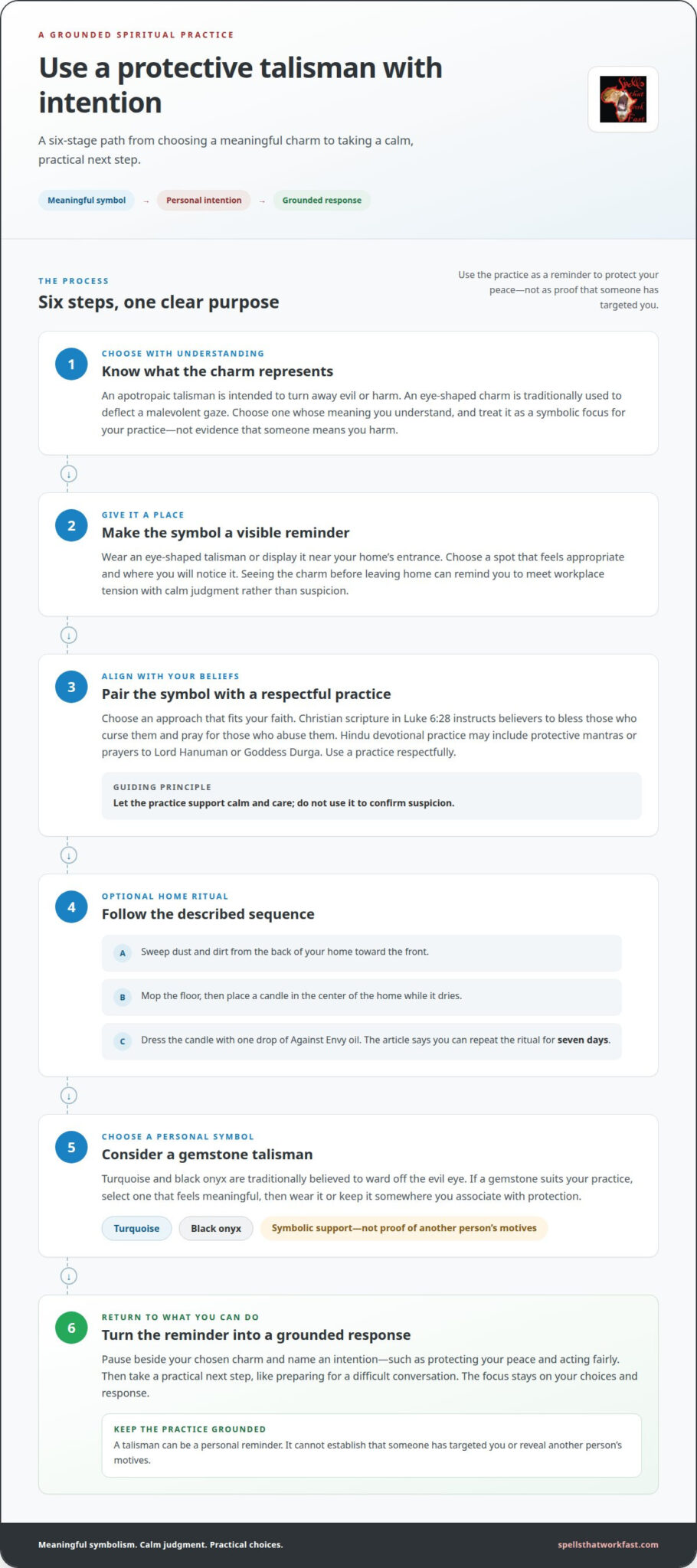
- Choose a charm whose meaning you understand. An apotropaic talisman is intended to turn away evil or harm. The eye-shaped design is traditionally used to deflect a malevolent gaze, making it a symbolic focus when jealousy or hostile attention concerns you. Use it as part of your spiritual practice, not as proof that someone has targeted you.
- Place the charm somewhere it can remind you of your intention. Wear an eye-shaped talisman as a personal symbol or display one near your home’s entrance. Choose a visible spot that feels appropriate. For example, seeing it before leaving home can remind you to meet workplace tension with calm judgment rather than suspicion.
- Consider how your faith addresses envy. Christian scripture in Luke 6:28 instructs believers to bless those who curse them and pray for those who abuse them. Hindu devotional practice may include protective mantras or prayers to Lord Hanuman or Goddess Durga. Choose a practice aligned with your beliefs, and use it respectfully.
- Create a simple home ritual by sweeping dust and dirt from the back of your home toward the front. Mop the floor, then place a candle in the center of the home while it dries. Dress the candle with one drop of Against Envy oil. You can repeat this ritual for seven days.
- Choose a gemstone talisman if it suits your practice. Turquoise and black onyx are traditionally believed to ward off the evil eye. Select a stone that feels meaningful, then wear it or keep it somewhere you associate with protection. Its symbolic role can support your intention, but it cannot confirm another person’s motives.
- Use the practice as a prompt for a grounded response. When envy or conflict weighs on you, pause beside your chosen charm and name an intention, such as protecting your peace and acting fairly. Then take a practical next step, like preparing for a difficult conversation. This keeps the ritual focused on your choices and response.
Blue evil-eye symbols
- Know the symbol before deciding how to use it. The blue evil eye, known as the nazar boncuk, is used as a symbol of protection. Its eye-shaped design provides a visible focus for an intention: meet jealousy with calm judgment, not retaliation. Keep that purpose in mind when choosing a charm for your business.
- Choose a blue nazar boncuk that suits the space where you’ll see it. A small desk ornament can serve as a private reminder before a difficult meeting. A framed image in a shared office can make the symbol part of the workplace atmosphere. Treat either as meaningful symbolism, not proof that a competitor has sent harm your way.
- Set a clear intention when you place the symbol. For example, say, “I’ll protect my focus and respond fairly.” This connects the nazar boncuk with a specific action you control. Use the same words before reviewing a tense email or preparing for a meeting with a rival business.
- Make the symbol part of a practical pause. If a competitor’s announcement unsettles you, look at the blue eye, take a breath, and identify your next business task. Then choose a grounded response, such as checking your campaign details or drafting a measured reply. The charm can cue this routine, but it cannot determine another person’s motives.
- Keep the practice personal and respectful. Explain the symbol’s meaning if you display it in a shared office, and avoid presenting it as a guarantee of business success. For spiritual support focused on envy, explore Protection From Jealousy And Envy as a separate next step. Keep ordinary business decisions grounded in clear facts, sound judgment, and direct communication.
In many Indian households, a nazar battu is hung near the entrance as protection against the evil eye. This is another protective practice, but the symbol need not be taken as a reason to assume someone means harm.
When you feel spiritually distressed, you may pray, “Lord, deliver me from evil.” Wearing a protective talisman is another traditional way to ward off the evil eye. These practices can accompany calm, practical responses that keep business choices grounded in clear facts and sound judgment.
Hatred and jealousy as sources of spiritual attack
Jealousy can strain trust, while some spiritual traditions interpret hostility as an attack. Use these steps to protect your peace without treating suspicion as proof.
-
Notice Jealousy’s Effects
Notice what happened before deciding what it means. A rival’s critical comment, a tense meeting, or repeated arguments with a colleague can create real strain, but none proves spiritual harm. Consider whether jealousy is affecting your choices, trust, or work relationships. Respond to events directly, and avoid accusing someone based only on fear or a troubling feeling.
To address a problem without blame, name how you feel and ask for a specific change. For example, request clear communication about a shared business decision instead of claiming a competitor intends harm.
-
Use Prayers or Affirmations
Choose a prayer or affirmation that steadies you. In Christian practice, someone facing intense spiritual distress may pray, “Lord, deliver me from evil.” Some deliverance prayers ask God to break agreements associated with jealousy, vengeance, or hatred. Say the words as an expression of faith, not as confirmation that a named person caused an attack.
If prayer fits your beliefs, focus on courage, fairness, and freedom from resentment. A brief affirmation such as “I will act with care and protect my peace” can guide your next conversation or business decision.
-
Consider Possible Harms
Keep spiritual practices focused on comfort and reflection. A prayer or charm can fuel fear if you use it to search constantly for an enemy, accuse a competitor without evidence, or avoid necessary conversations. Pause the practice if it intensifies suspicion or disrupts your everyday relationships. Spiritual protection should not become a reason to retaliate or isolate yourself.
Consider speaking with a counselor or trusted religious leader if jealousy repeatedly disrupts your work, relationships, or sense of safety. Bring a concrete example, such as ongoing conflict with a business partner, so you can discuss practical responses alongside spiritual concerns.

What prayers or affirmations can help protect against jealousy?
- Choose words that reflect your faith and name the response you want. For example, before a tense negotiation, affirm, “I will protect my peace and act with fairness.” Keep the statement focused on your choices, not assumptions about a competitor’s motives. This makes spiritual protection from jealousy a reminder to stay steady, communicate clearly, and avoid reacting from resentment.
- Use the biblical response in Luke 6:28 when it fits your beliefs: bless those who curse you and pray for those who abuse you. Make the prayer specific to a workplace situation. Ask for restraint before answering a hostile message, or for wisdom before discussing a business conflict. The practice directs attention toward your conduct rather than retaliation.
- For a Christian prayer during intense distress, say, “Lord, deliver me from evil.” A deliverance prayer may also ask God to break agreements made against you through jealousy, vengeance, or hatred. Keep the request centered on protection and release. Don’t use prayer as proof that a named person has caused spiritual harm.
- If Hindu practice is part of your faith, you might chant a protective mantra or pray to Lord Hanuman or Goddess Durga for protection from negative influences. Choose a form of devotion you understand and can approach respectfully. Before a challenging meeting, use the prayer to settle your attention, then prepare your points and speak directly about the business issue.
- Set a simple prayer routine around a clear moment, such as before opening your office or reviewing a difficult proposal. Repeat your chosen words, then take one grounded action, like writing a calm response or asking for a direct conversation. For focused spiritual support, explore Protection From Jealousy And Envy as a next step.
For a home-protection ritual, dress the candle with one drop of Against Envy oil, keeping the practice focused on reassurance rather than suspicion.
Spells That Work Fast: Protection From Jealousy And Envy
Spells That Work Fast offers Protection From Jealousy And Envy for people seeking spiritual support when envy or hostility feels troubling. Consider it if charms, prayer, or affirmations aren’t enough for your personal practice. The focus is protection from jealousy and envy, not proving that a competitor has caused harm. For business concerns, Spells For Business Growth Support and Success addresses a different intention: supporting business growth and success. Choose the offering that fits your concern, while keeping practical decisions grounded in clear communication and evidence. Contact Spells That Work Fast to discuss spiritual support for protection from jealousy and envy.
Choose Your Next Step With Confidence
Choose your next step according to what you want to protect and which spiritual practice feels right to you. A charm can hold personal meaning, while a dedicated spiritual practice can offer another way to focus your intention. Keep your choices grounded in care, clear judgment, and respect for others. Spiritual protection from jealousy can begin with a deliberate choice about how you respond to envy or tension.
Spells That Work Fast offers Protection From Jealousy And Envy, along with Instant Love Spells That Work Fast, Powerful Money Spell To Attract Wealth Instantly, and Spells For Business Growth Support and Success. Each offering addresses a different concern, so focus on the one that fits your needs.
Contact Spells That Work Fast to discuss spiritual support. Take your next step with a steady mind and confidence in your own choices.
Frequently Asked Questions
What does spiritual protection from jealousy mean?
Spiritual protection from jealousy means choosing faith-based practices that help you maintain calm, boundaries, and clear judgment when envy feels present. It doesn’t establish that someone has harmed you. For example, after a tense client meeting, take a moment to reflect before deciding whether to address a specific comment or return to your work.
What spiritual practices can help protect against the evil eye?
A cleansing ritual using camphor or a sage stick is one spiritual practice associated with clearing negative energy or the effects of the evil eye. Choose a practice that fits your beliefs, set a clear intention, and use it as a moment to refocus. Then address any real-world concern directly, such as clarifying a misunderstanding with a colleague.
Are protective crystals or amulets effective, and how are they used?
Protective crystals and amulets serve as symbolic supports in spiritual traditions, not substitutes for practical action. Wear a chosen stone or keep an amulet nearby as a reminder of your intention. For example, carry it during a presentation to stay focused on your prepared message. Its meaning can guide your mindset, but it can’t establish another person’s motives.