

Learning how to stay detached after hiring a spellcaster starts with keeping spellwork separate from your daily choices and responsibilities. When you feel pulled to check for signs or search for updates, pause for 60 seconds, notice what you’re feeling, and bring your attention back to the present. Keep your boundaries clear, and let your actions reflect what you can control.
It’s understandable to feel invested when a personal situation matters deeply. But watching for every possible sign can consume your attention and make it harder to care for yourself, manage shared responsibilities, and judge what is happening clearly.
This article explains how to separate feelings from practical duties, set boundaries that protect your focus, and notice when attachment is taking up too much energy. You’ll also find ways to handle necessary interactions and keep checking for results from taking over your day. The goal isn’t to deny what you feel. It’s to make room for your life while you decide what deserves your attention next.
Key Takeaways
- Separate what you feel from what you need to handle, then adjust your involvement to a level you can sustain.
- Keep necessary conversations focused on shared responsibilities, with clear limits on topics and emotional engagement.
- Notice when thoughts about another person are consuming your attention, and make space for interests and relationships beyond the situation.
- When you feel pulled to look for signs, use a grounding practice and return your focus to the present instead.
Professional detachment as emotional separation
Separate personal feelings from practical duties. These steps can help protect your focus without denying what you feel.
-
Redefine Emotional and Physical Availability
Set clear limits on when you respond and what physical contact feels comfortable. Keep shared responsibilities, such as scheduled meetings or bills, separate from requests for reassurance. If a conversation draws you into emotional caretaking, pause and return to the agreed topic. Being available is a choice, not proof of care, and you can say no.
-
Recognize Emotionally Draining Signs
Notice how the relationship affects your attention and mood after each interaction. Do you feel unusually reactive, spend a lot of energy anticipating the other person’s behavior, or repeatedly hear concerns dismissed and promises broken? These patterns may mean your current level of involvement is draining. Reduce contact where possible, and don’t keep expecting a response the person has not typically offered.
-
Notice Magical Thinking and Emotional Attachment
Notice when you treat a sign, coincidence, or imagined outcome as proof that another person will act a certain way. Spellwork may feel emotionally significant, but it cannot replace observing real behavior or making your own choices. Write down what you know, what you hope, and what remains unknown. Separating belief from evidence can help keep your decisions grounded.
- In the United States, consumer protections depend on the transaction and the claims made. Keep written terms and payment records.
- Ask about the fee and what it covers before proceeding. Be cautious of pressure to make extra payments or claims of certain results.
- Spellwork does not come with a fixed timetable. Treat it as spiritual practice, and judge relationships by observable conduct and your own choices.
- When anxiety rises, pause for 60 seconds, breathe slowly, and name one practical action you control.
- Ask about the method, possible risks, limits, follow-up, and whether additional payments may be requested.
- If worry feels overwhelming or disrupts daily life, seek support from a mental health professional.
Keeping interactions focused on shared responsibilities
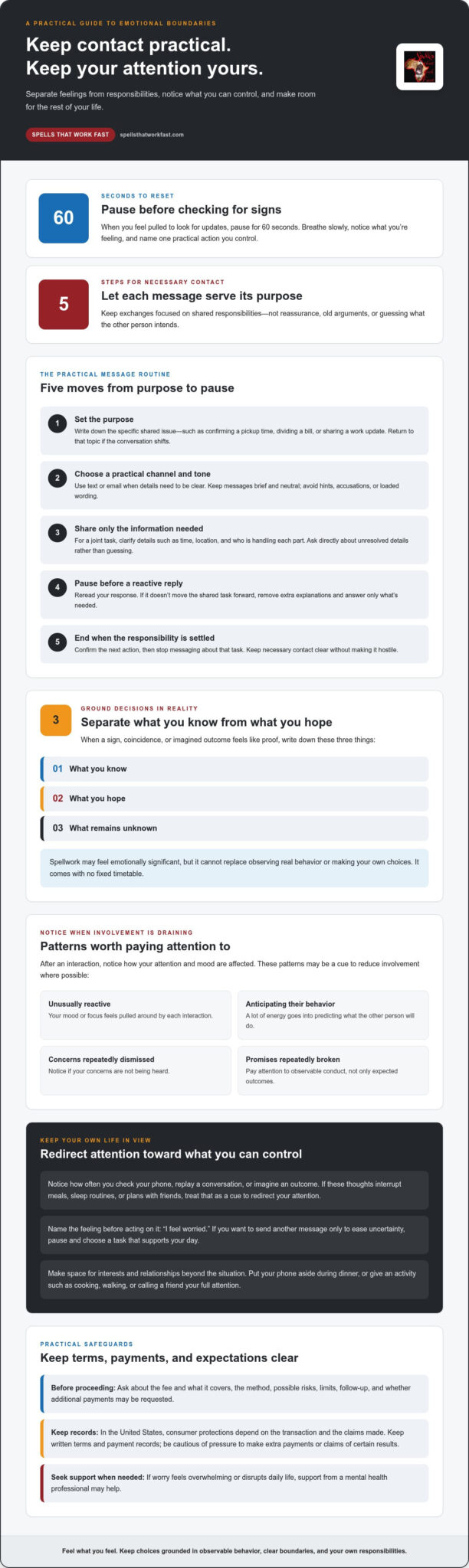
When regular contact is necessary, tie each exchange to a shared task. A clear purpose can keep practical discussions from turning into emotional negotiations.
- Set the purpose before reaching out. Write down the specific issue, such as confirming a pickup time, dividing a bill, or sharing a work update. Keep your message focused on that task. If the conversation shifts to old arguments or romantic questions, calmly return to the point: “I’m messaging about the schedule.”
- Choose a practical channel and tone. Use text or email when details need to be clear, such as plans for a shared event or responsibility. Keep messages brief and neutral. Avoid hints, accusations, or loaded wording that could invite a debate about what the other person feels.
- Agree on the information each person needs. For a joint errand, share the time, location, and who is handling each task. Don’t add personal questions just to extend contact. If a detail is unresolved, ask directly rather than guessing at the other person’s intentions.
- Pause before sending a reactive reply. Read the message again and ask whether your response moves the shared task forward. If not, remove extra explanations and answer only what’s needed. For example, confirm a changed meeting time without reopening a disagreement about the relationship. One practical way to stay detached after hiring a spellcaster is to let each message serve its stated purpose.
- End the exchange when the responsibility is settled. Confirm the next action, then stop messaging about that task. If the other person returns to a personal subject, say you’re keeping this conversation focused on the arrangement. If you’re deciding how to stay detached after hiring a spellcaster, use consistent limits to keep necessary contact clear and manageable.
Practical communication doesn’t require hostility or a dramatic announcement. Choose a clear subject, answer relevant questions, and leave personal discussions for a time when you genuinely want to have them.
How attachment affects energy and feelings
Notice where your attention goes after spellwork. These steps can help keep feelings from consuming energy you need elsewhere.
- Track how much attention you give the situation. For one day, note each time you check your phone, replay a conversation, or imagine a particular outcome. This record can show where your focus goes. If thoughts about one person interrupt meals, sleep routines, or plans with friends, treat that pattern as a cue to redirect your attention.
- Name the feeling before acting on it. When no message arrives and you feel anxious, write “I feel worried” rather than deciding that the silence proves something. Then identify why you want to act. If you’re about to send another text only to ease uncertainty, pause and choose a task that supports your day.
- Protect your energy with a simple boundary. Picture a clear line between your personal life and the relationship: the other person’s choices stay on their side, while your schedule and responses remain yours. For example, put your phone aside during dinner instead of watching for a notification. This lets you care without monitoring every move.
- Make room for interests that aren’t tied to this connection. Choose an activity, such as cooking, walking, or calling a friend, and give it your full attention. Caring deeply can show engagement, but excessive investment can have negative effects. Notice whether thoughts about the relationship are crowding out routines and people that make your life feel broader.
- Give sadness a place without letting it run the day. Write down what you miss and what didn’t work, then choose a next step, such as finishing a meal or meeting a friend. Grieving a relationship that didn’t work can help you face the feeling instead of keeping your attention fixed on imagined outcomes.
The same distinction applies to work. Caring about your work can show engagement and contribute to high performance, but excessive concern can have negative effects. Notice whether it helps you participate fully or leaves too little attention for rest and relationships. Aim to care for your responsibilities without making every outcome a measure of your worth.
How can you avoid obsessing over spell results or checking for signs?
Break the checking loop with deliberate actions. Repeatedly looking for signs can keep your attention fixed on the relationship. Learning how to stay detached after hiring a spellcaster means making room for uncertainty without letting it direct your day.
- Notice what you’re trying to control. Name whether you’re attached to a particular timeframe, another person’s choices, or a specific plan. Write down the thought, then separate what you can do from what you can’t decide for someone else.
- Set a brief daily grounding practice. Focus on what you can see, touch, hear, smell, and taste. For example, name visible objects, feel your feet on the floor, and notice nearby sounds. This brings your attention back to the present instead of imagined signs.
- Consider a broader outcome. Stay open to something different from what you first pictured, and ask what would still help you build a satisfying life. You can pursue change while noticing what is already steady, such as a supportive friend or a routine you value.
- Use a personal surrender prayer as a reflective practice, not a substitute for practical choices. You might repeat it daily for 30 days, then return to it whenever you notice yourself trying to control an outcome. Keep the words focused on releasing control and acting with care.
- Practice detachment in a lower-stakes situation first. If you’re waiting for a routine reply, resist checking for a while and continue with your planned task. Notice signs of progress, such as enjoying time with friends or getting through the day without checking for a message. This is one practical way to stay detached after hiring a spellcaster.
If spiritual practice remains meaningful to you, explore love spell support while keeping your choices and daily life grounded in what you can control.
Spells That Work Fast: Instant Love Spells That Work Fast
Spells That Work Fast offers Instant Love Spells That Work Fast for people seeking love-focused spiritual support. Consider this service if love is your focus, while maintaining clear boundaries, grounded choices, and attention to your wellbeing. Keep practical responsibilities and emotional care in your hands rather than treating spellwork as proof of what another person feels or will do.
Spells That Work Fast also offers Powerful Money Spell To Attract Wealth Instantly, Spells For Business Growth Support and Success, and Powerful Pet Psychic services for different concerns. Choose an offering that fits your situation, and keep your expectations focused on the spiritual support you seek, not control over another person’s choices.
Contact Spells That Work Fast to discuss your interest in love spellwork.
Choose a Next Step That Keeps You Grounded
Let your next decision come from your values, not pressure to decode every event. You can care about a hoped-for outcome while still choosing what supports your wellbeing today. That shift leaves room for decisions based on real interactions, personal limits, and the life you want to build beyond this situation.
Learning how to stay detached after hiring a spellcaster means keeping your own choices at the center. Treat spiritual practice as one part of your personal path, not a reason to put your plans, relationships, or peace on hold. If you’re seeking love-focused spiritual support, take time to decide what you want and what boundaries you’ll maintain as you move forward.
For information about love spellwork, contact Spells That Work Fast. Keep choosing actions that honor your needs and leave space for a future shaped by your own decisions.
Frequently Asked Questions
What does staying detached after hiring a spellcaster mean?
It means treating spiritual work separately from evidence about another person’s feelings or future actions. For example, don’t interpret a delayed text as proof that a spell is working or failing. Make relationship decisions based on direct communication and observed behavior. You can remain open to spiritual practice while protecting your judgment, routines, and ability to choose what happens next.
How can you set boundaries with a spellcaster and avoid pressure to buy more services?
Before a conversation, decide what you’re seeking and write down the questions you want answered. If another service is suggested, ask its purpose and take time to consider it without agreeing immediately. You can say, “I’m not choosing anything additional today.” Keep a record of messages and decisions, and end the discussion if pressure makes you uncomfortable.