


Feeling nothing after casting a love spell doesn’t prove it worked or failed. Emotional symptoms after casting a love spell may range from calm or hope to anxiety, fixation, or no noticeable change. A shift in your feelings or communication is not reliable evidence that a spell has worked or worn off.
It’s understandable to watch for signs when you care about the outcome. But worry, tiredness, or difficulty concentrating don’t show that a ritual caused them, and another person’s silence can’t tell you what they feel. Try not to interpret every mood change as a message or rush to repeat a spell just to ease uncertainty.
This article explains how to understand emotional and relationship changes without mistaking them for proof. You’ll learn how anxiety can build while you wait, what to consider before recasting, cleansing, or strengthening a spell, and when emotional distress calls for support beyond spiritual practice.
Key Takeaways
- A change in contact or affection isn’t reliable proof of a spell’s effect; respect the other person’s boundaries and willingness.
- Separate occasional feelings or coincidences from persistent patterns that affect your daily life.
- Before repeating a ritual, consider its purpose and give the first one time rather than reacting to every uncertain sign.
- Constantly checking for results can feed anxiety; seek support from someone you trust or a qualified professional if distress disrupts daily life.
Changes in communication and relationship dynamics
Communication may change after a ritual, but a change alone can’t show why. Track actual interactions, personal boundaries, and your own responses instead of treating each change as proof.
Shifts in Thoughts and Perspectives
Shifts in your thoughts can change how you see yourself, the relationship, or your daily choices. Your perspective may change even if nothing changes externally with the other person. Notice, for example, whether you feel calmer before sending a message or whether thoughts about them interrupt your work. Record the situation and your response, then look for patterns.
Effects on Another Person’s Behavior
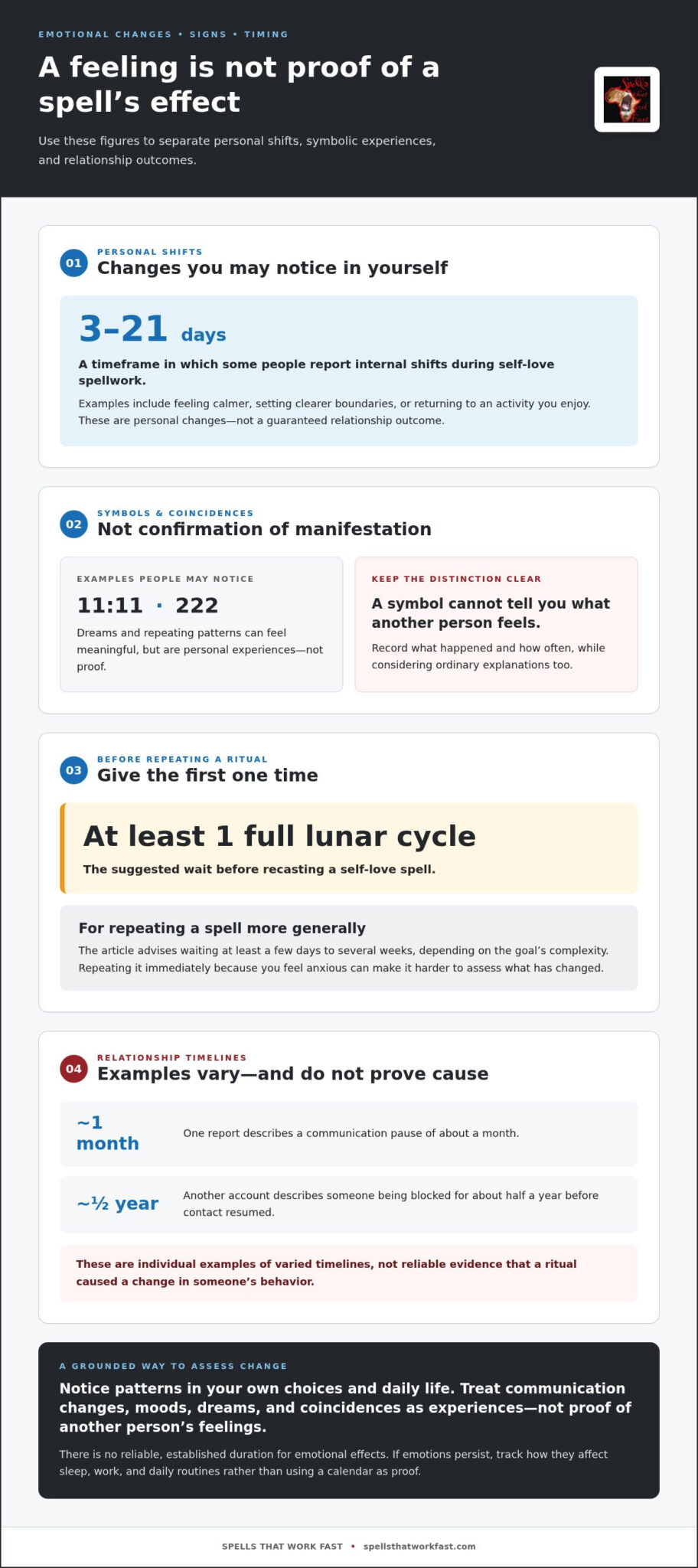
A love spell cannot provide another person’s consent, and changed behavior doesn’t establish that a ritual changed their feelings. Reports describe communication pauses of about a month, while another account describes someone blocking a man for about half a year before contacting him again. These examples show how relationship timelines vary, not reliable evidence of spell effects. If contact is welcome, ask directly, and respect a refusal or request for space.
Pay attention to the quality of communication, not just how often it happens. A warmer reply, delayed response, or sudden silence can have many explanations. Avoid sending repeated messages when someone hasn’t answered. Identify a situation where you say yes but mean no, then set a different boundary.
Your reactions to criticism can also reveal a shift. If a partner’s comment feels unusually painful, pause before replying. Write down the exact words and your first interpretation. This can help separate what was said from what fear may have added.
Physical changes, such as tiredness or disrupted routines, don’t prove that a ritual caused them. Keep self-care practical: eat regularly, rest, and note when symptoms affect daily tasks. Persistent changes deserve attention beyond spiritual interpretation.
If a practitioner threatens or pressures you, stop engaging and don’t send more money. Save the messages, tell someone you trust, and contact emergency services if you face immediate danger.
Distinguishing signs from full manifestation
Notice patterns while separating changes in yourself from external outcomes. A meaningful sign isn’t the same as a changed relationship.
Dreams, Coincidences, and Symbolic Signs
Dreams and repeating patterns are personal experiences, not proof of manifestation. You might dream about someone or notice 11:11 and 222 after setting an intention. Record what happened and how often, then consider ordinary explanations too. One coincidence cannot confirm spell work, and symbols cannot tell you what another person feels.
For self-love spellwork, people may notice internal shifts within 3 to 21 days, depending on internal resistance. Examples include feeling calmer, setting clearer boundaries, or returning to an activity you enjoy. These changes show personal progress, not a guaranteed relationship outcome.
Signs a Spell May Need Adjustment
Adjustment means reviewing whether the ritual still matches your intention. A period without signs, shifts, or inner movement may prompt reflection, but discomfort alone doesn’t mean you need another ritual. Consider whether your goal is clear and focused on your own choices. For a self-love spell, wait at least one full lunar cycle before recasting.
Limited progress may look like occasional hope without consistent changes in your choices or routines. Noticing only one or two signs now and then doesn’t establish that a spell is working. Look for sustained shifts, such as less panic or renewed attention to friends, rather than fixating on a single dream.
Duration of Emotional Effects
Emotional effects have no reliable, established duration. Some people notice internal shifts quickly, while external results may take days or weeks. A ritual can feel meaningful without explaining symptoms or changing someone else’s feelings. If emotions persist, track how they affect sleep, work, and daily routines instead of using a calendar as proof.
Love spells aren’t supported by established scientific evidence as a way to cause another person’s feelings or behavior. The ethical boundary is consent: reconciliation requires mutual willingness, and a ritual can’t provide someone else’s consent. If you’re considering Instant Love Spells That Work Fast, keep your intention focused on your choices and respect the other person’s boundaries.

Whether to recast, cleanse, or strengthen a spell
A quiet period can make you feel that a spell has failed, but that feeling alone doesn’t show what happened. Before recasting, write down your original intention and the changes you can actually observe. Separate your mood from external signs, such as a message or changed plans. This can keep urgency from driving your next decision.
Timing matters. Wait at least a few days to several weeks before repeating a spell, depending on the complexity of the goal. Repeating it immediately because you feel anxious can make it harder to assess what has changed. For a self-love spell, wait at least one full lunar cycle before recasting. Use the time to notice shifts in boundaries, confidence, or daily habits.
Consider cleansing if the ritual itself feels emotionally heavy or distracts you from its intention. Treat cleansing as a personal reset, not proof that something harmful happened. You could put away ritual items, tidy the space, and restate the original goal in plain words. If this reduces pressure, pause before adding more spell work.
Strengthening means clarifying your intention, not escalating through repeated rituals. Ask whether the goal is specific and within your control. “I want to feel secure and open to mutual love” focuses on your choices. “Make this person contact me” centers another person’s behavior and consent. That distinction matters before changing the ritual.
Use these checks before deciding:
- Recast: Have you allowed enough time for the goal’s complexity?
- Cleanse: Is the practice adding stress instead of focus?
- Strengthen: Can you make the intention clearer and centered on your own actions?
If distress affects your sleep, work, or daily life, prioritize support from someone you trust or a qualified professional over another ritual.
Anxiety and overthinking while waiting
Waiting can turn ordinary uncertainty into a cycle of checking, guessing, and worrying. Emotional symptoms after casting a love spell may include anxiety, but that feeling alone doesn’t show what caused it. Some people notice internal shifts quickly, while external changes may take days or weeks. Timing cannot establish that a ritual caused a feeling.
Break the checking cycle with a clear boundary. Put your phone away during a planned activity, such as cooking dinner or taking a walk. Avoid repeatedly checking messages, social media, or the clock for signs. A quiet period without contact doesn’t tell you what another person feels. Use the time to return your attention to your own routine.
Try a simple evening practice: write down one thing you handled well that day. If your thoughts keep circling, separate the concern from what you know. “They haven’t replied” is an observation; “the ritual failed” is an interpretation. This distinction can make it easier not to react out of fear.
Some people use “spell drop” to describe emotional intensity, but it isn’t a medical diagnosis or an established explanation for symptoms. Notice patterns in your sleep, focus, and daily responsibilities instead. Emotional symptoms after casting a love spell don’t prove spell work caused them. Stress, expectations, and other factors can shape how you feel.
To cope with distress, pause repeated checking, choose a grounding activity, and tell someone you trust what’s happening. Seek support from a qualified mental health professional if symptoms persist, feel distressing, or affect your daily life. If you’re struggling to work, sleep, or manage routine tasks, don’t wait for a spiritual explanation before seeking help.
Spells That Work Fast: Instant Love Spells That Work Fast
Spells That Work Fast offers Instant Love Spells That Work Fast for people seeking spiritual support around love. Consider this option when you’ve clarified your intention and want a ritual focused on your romantic hopes, rather than treating anxiety or silence as proof that something needs fixing.
Keep your expectations grounded: a spell can’t provide another person’s consent or guarantee a relationship outcome. If emotional distress is affecting daily life, seek support from a trusted person or qualified professional instead of relying on a spiritual service to diagnose symptoms. For a love-focused spiritual option, visit Spells That Work Fast.
Choose Your Next Step With Clear Intent
Let your next move reflect what you want to build in your own life, not pressure to decode every feeling. Emotional symptoms after casting a love spell may feel urgent, but urgency isn’t a reason to act before you feel steady. Take a moment to name what you need most: clarity, emotional support, or a spiritual practice that aligns with your values. That choice can help you move forward without letting uncertainty set the pace.
If spiritual support still feels right, approach it as a personal practice, not a way to control another person or replace care for persistent distress. Spells That Work Fast offers love spell services, but no spell can guarantee a relationship outcome. Keep your boundaries and well-being central as you decide what comes next.
Ready to explore a love-focused spiritual option? Contact Spells That Work Fast and take your next step with a clear intention. You deserve to move forward with care, self-respect, and hope.
Frequently Asked Questions
What if I feel nothing after casting a spell?
Feeling nothing doesn’t prove that a spell worked or failed. Don’t force an emotion to appear or keep testing yourself for one. Instead, write down what you hoped would change and what you can observe in your own choices. For example, note whether you’re acting with more confidence, even if your mood feels unchanged. Avoid treating silence as a personal verdict.
How do I know if a love spell is wearing off?
There’s no dependable emotional or relationship sign that proves a love spell is wearing off. A quieter week, fewer messages, or a change in your mood can’t establish a cause. Compare your situation with specific facts, such as whether plans changed or communication stopped. Separate interpretations from observations, and don’t let one difficult day determine your next decision.
Can You Tell Whether a Love Spell Has Worn Off?
No reliable test can show that a love spell has ended. Ask what evidence would still matter if you hadn’t performed a ritual. A direct conversation, for example, is clearer than interpreting a song, dream, or social media post. Focus on choices both people make openly. Their words and boundaries matter more than assigning a hidden cause to every change.
Should I repeat the same ritual right away?
No. Give the first ritual time before deciding to repeat it. A suggested waiting period is at least a few days to several weeks, depending on the goal’s complexity. For a self-love spell, wait at least one full lunar cycle before recasting. Use the pause to review your original intention and notice concrete changes, rather than repeating the ritual in response to a moment of panic.
What emotional symptoms do people report after casting a love spell?
People describe varied feelings, including calm, anxiety, fixation, longing, sadness, or sudden urges to contact someone. Others report dreaming about that person or having difficulty focusing on work or school. These are personal reports, not a diagnostic checklist or proof of spell work. Notice whether a feeling is occasional or interfering with your routines, and respond to its impact rather than treating it as a supernatural signal.
Can anxiety or guilt after a love spell be caused by stress or expectation?
Yes. Stress and expectations can shape how you notice and interpret emotions, especially while waiting for an outcome you care about. Anxiety, guilt, tiredness, or trouble concentrating don’t show that a ritual caused them. Write down when the feelings arise and what else is happening that day. If they persist, cause distress, or disrupt daily responsibilities, seek support from someone you trust or a qualified professional.